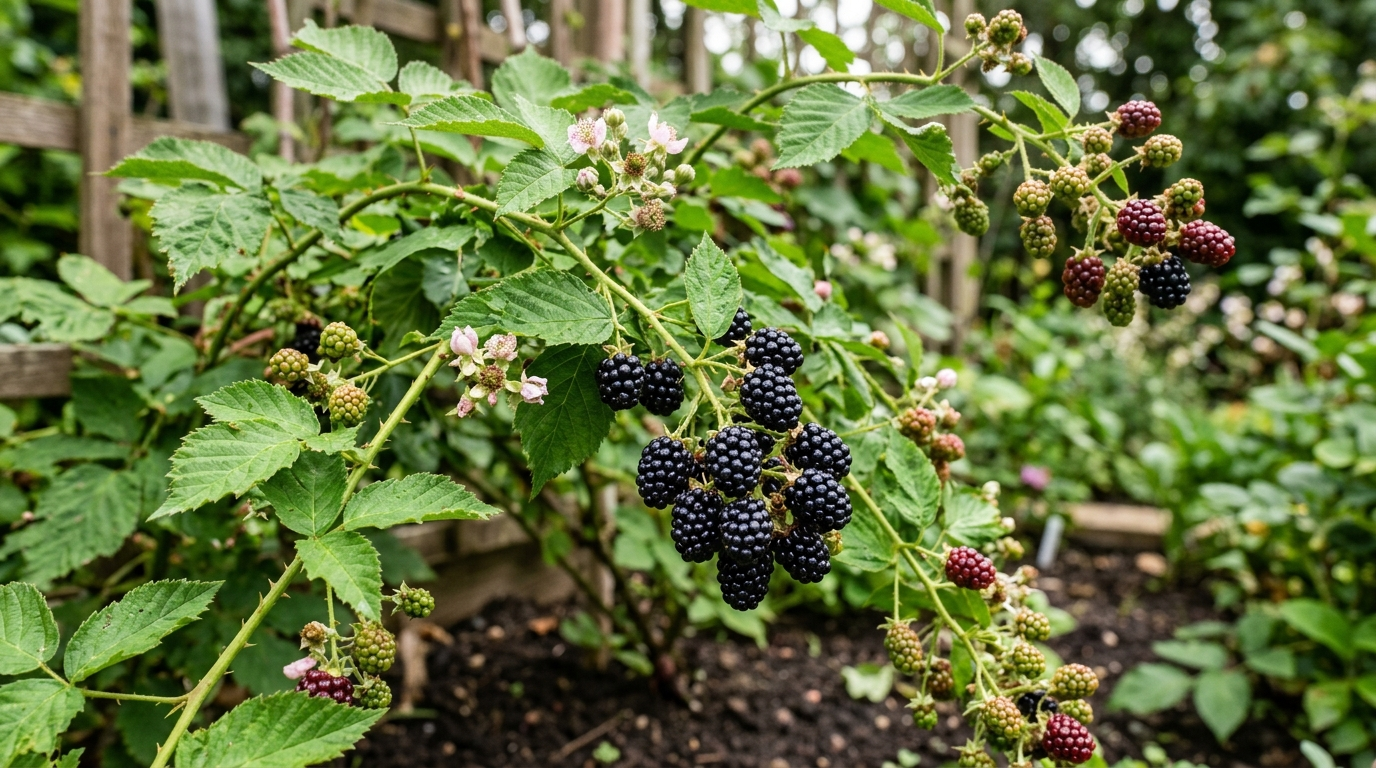
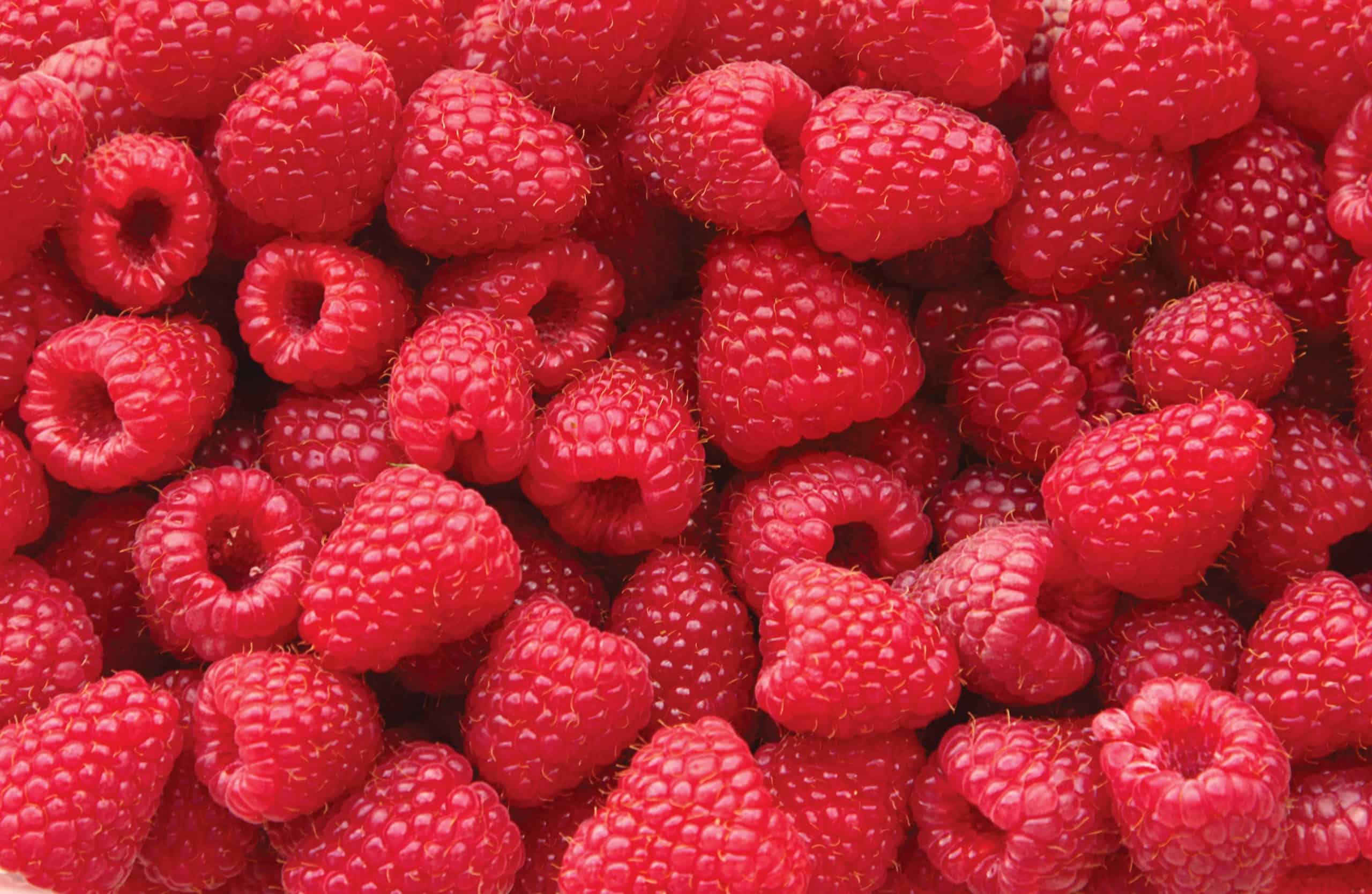
There is a good case to be made that thornless blackberries are among the best-kept secrets of the home garden. These perennials are highly productive and will put out baskets of sweet, juicy berries, all without the painful thorns one expects from the traditional blackberry plant. They are simply more manageable in a small space, easier to prune, and safer for children when it comes time to harvest.
With proper care, a single plant can be fruit-bearing for years. Some of the thornless types will give you as much as 10 pounds of berries in one season; under ideal conditions, a large, mature specimen may yield closer to 20 pounds. That is plenty of produce for making jam or freezing for later, not to mention fresh eating and desserts.
The lack of thorns is the most apparent benefit of these blackberry plants. Those who have tried to pick from thorny canes are well aware how uncomfortable it can get. With the thornless kind, there is no risk of scratched hands or snagged clothes for the gardener or the customer at a pick-your-own farm.
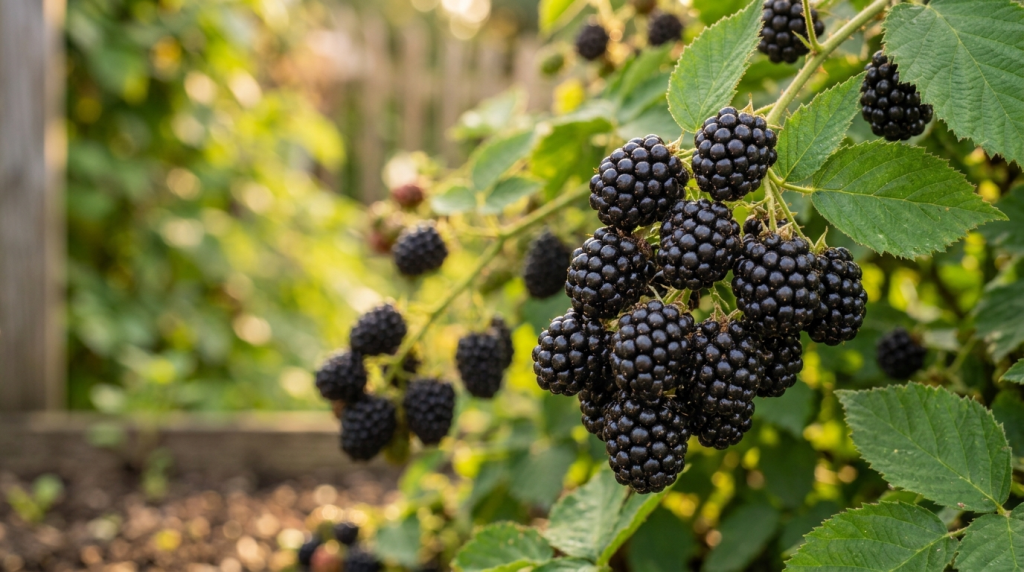
They are also a cinch to train and support. Rather than letting the long canes form an impenetrable tangle, they can be put up on a trellis, which makes old growth easy to remove and ripe fruit easy to spot. And then there is the quality of the berry itself. Packed with fiber, vitamins, and antioxidants, they are great in a smoothie or pie. Left on the vine until fully ripe, as a home grower would, they tend to have a superior flavor and sweetness to what is found in the grocery store.
If you want a crop that is both productive and delicious, thornless blackberry plants should have a spot in your garden.
Choosing Your Variety
The season for blackberries can be extended from early summer well into the fall by planting different varieties.
Natchez is known for its large fruit and early start, often ripening in early July, depending on the weather. Ouachita is a favorite with market growers and home gardeners alike for being dependable and having an attractive, consistent yield. Then there is Apache, with its upright canes and large berries; this variety is easy enough to handle but also needs some support once laden with fruit.
For a long harvest, Triple Crown is a semi-erect option that will keep producing its main crop of large, sweet berries for over a month. Prime-Ark Freedom is a primocane type that fruits on first-year canes, offering an early crop and another later on in the right climates, which is useful for bridging the gap between other harvests.
At ION, we carry Triple Crown for its long, reliable harvest window, a great pick if you want a steady supply through the heart of summer. Beginning in fall 2027, we will also be offering Prime-Ark Freedom.
In the end, the choice comes down to winter cold and summer heat. While many of these thornless types are happy in USDA Zones 5 to 9, tolerance to the cold does vary.
Where to put them matters as well. For the best yield and flavor, blackberries require full sun. Find a place in the garden where they will get six to eight hours of direct sunlight. While some plants will make do in the shade, blackberries are not at their best without sun and will put out less in the way of flowers and fruit. For blackberries, a well-drained sandy loam is the preferred growing medium, yet these are hardy enough to be found in an assortment of soils. What is non-negotiable is good drainage; standing water after a rain can harm the roots and invite disease.
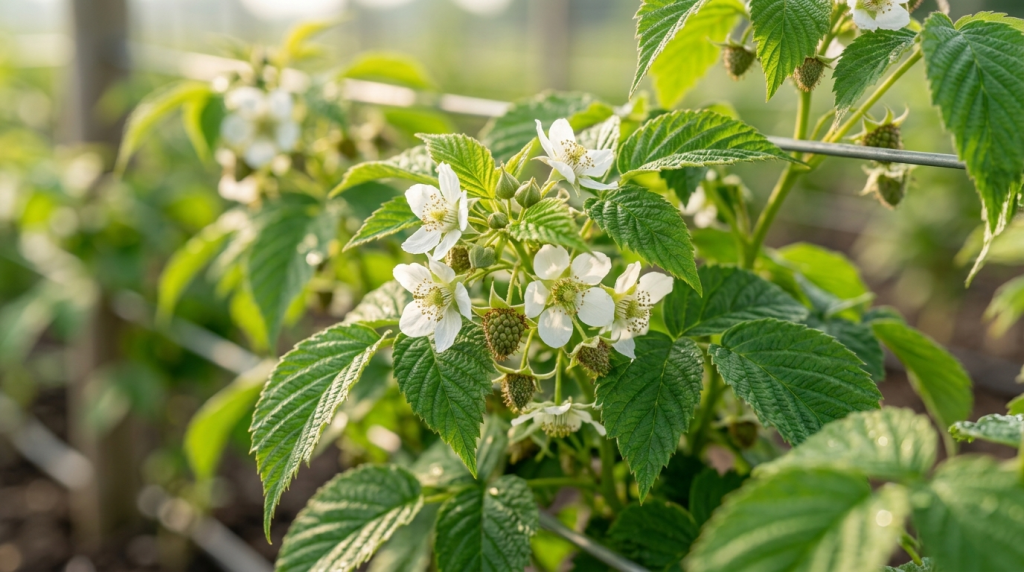
The time to put in thornless blackberries is early spring when the ground is workable, though in milder climates, they can be planted in the fall or even in winter. Give erect types 3 or 4 feet of room between plants. This spacing is important for airflow and to give the roots somewhere to go, not to mention it simplifies the work of pruning and picking down the line. Do not be tempted to fill in every gap in the row. The canes will put on size fast and need space so as not to get crowded.
Supporting Canes With a Trellis
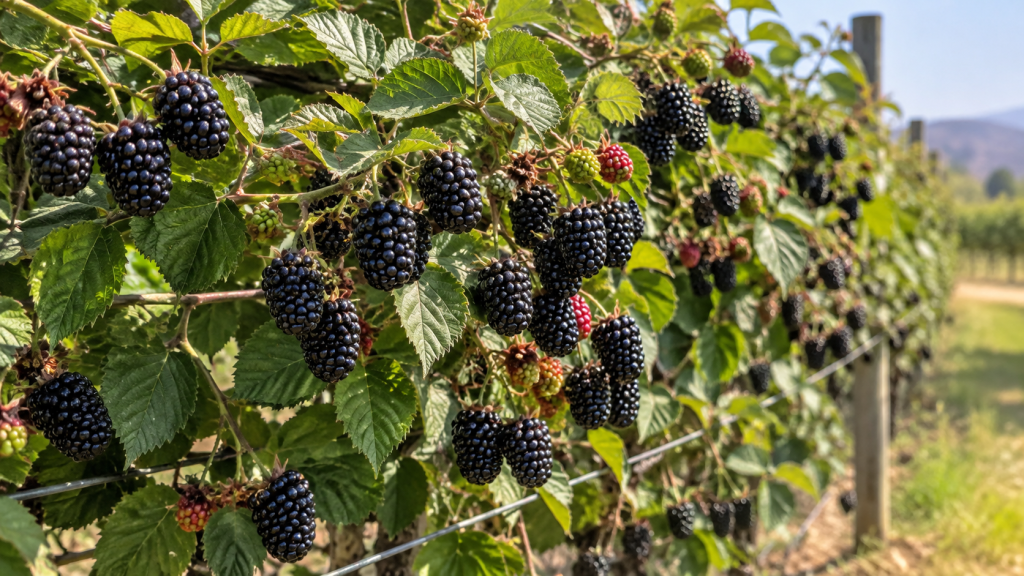
A trellis is an asset even for the more upright thornless types. When the canes are heavy with fruit, or have been rained on, they have a tendency to sag. A basic two-wire setup holds them up and puts the berries within easy reach while keeping them off damp soil for a better yield. Trailing sorts are another matter; their long canes will not stand on their own and demand a more substantial support system. It is wise to check the growth habit before purchasing so you can prepare the proper trellis set-up from the start.
Water, Mulch and Fertilizer
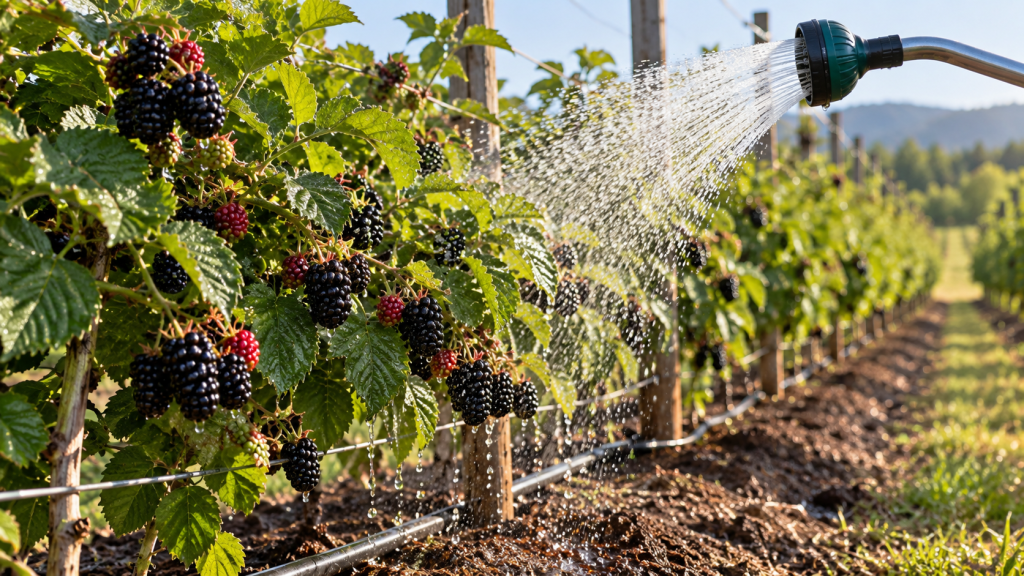
During the active growing season, plan on about an inch of water a week. In the height of a hot summer or as the fruit sets, they may require more. Deep watering is best to push the roots further into the earth.
Mulching serves to protect the roots from temperature swings and keep weeds at bay, but leave a few inches clear of the crowns to prevent too much moisture at the base of the canes. As for fertilizer, a 5-5-5 organic blend at roughly 10 pounds per 100 feet of row is sufficient. A soil test is a better guide than guesswork since over-fertilizing will only spur unwanted growth without any gain in the harvest.
Pruning for the Year Ahead
Blackberry canes are mostly a two-year proposition: primocanes in year one, and floricanes that flower and bear fruit in the second. Once you have harvested from them, those canes are done producing and should be cut back to the ground. Prune twice a year to manage the stock; in summer to head off new canes which will promote laterals, and in winter to take out the weak stuff before spring. There are exceptions, like the Prime-Ark Freedom, which will fruit on first-year wood and needs different care.
A Productive Addition to the Home Garden
For the home gardener, thornless blackberries are a sound choice. They offer nice flavor and are easy to harvest, being as uncomplicated for a first-time grower as they are productive for someone more experienced. Provided they have sun, steady water, and a trellis, they will put on a show each spring. Put in a few different varieties and the family can have a reliable supply of sweet berries from July through late summer, all without the thorns.